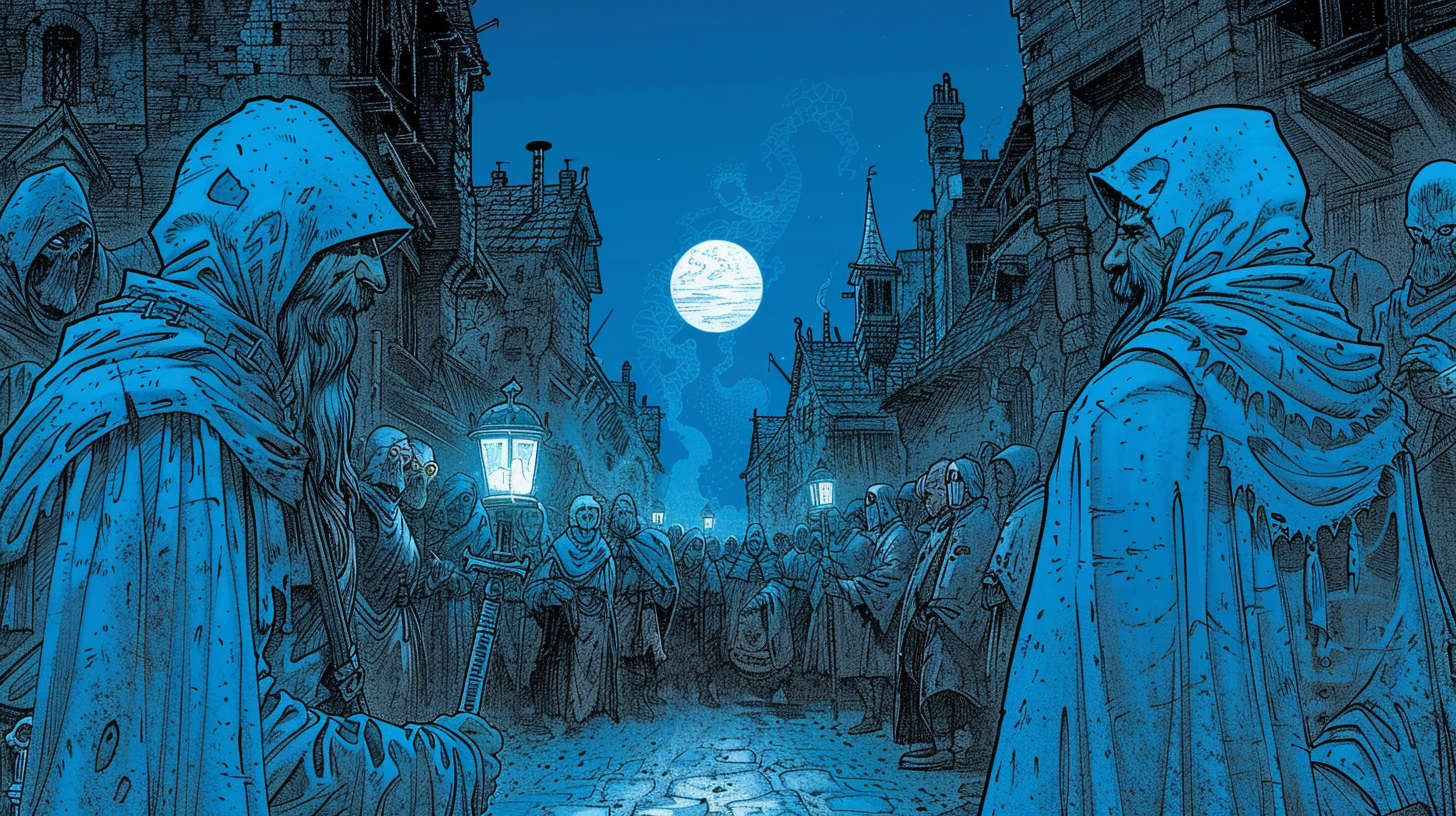
Real Factions in Campaigns That Feel Alive
Most faction conflicts in dark fantasy campaigns fall apart for the same reason. The groups only exist to oppose each other on the page. One house wants the throne. One cult wants to end the world. One guild wants money. Everyone lines up, picks a side, and waits for the players to kick in the door. It works for a session or two. But it rarely holds up once the table starts asking obvious questions. Why does this faction want that? Why does everyone in the group agree completely? Why has this feud lasted for years if neither side has changed tactics once?
Players can feel when a rivalry exists because the plot needs tension instead of because the world produced it naturally. Once they notice that, the conflict starts to feel staged.
Start with Pressure, Not Ideology
If you want real factions in dark fantasy campaigns to feel authentic, begin with pressure rather than ideology. A believable faction usually wants something practical and urgent. Land. Food. Safe passage. Access to a ritual site. Protection from a ruler who keeps changing the law. The rivalry begins when two groups need the same thing and there is no clean way for both to have it.
That approach proves more useful than starting with labels like noble, heretical, corrupt, loyal, or evil. Those labels tell you how the faction looks from the outside. They do not tell you what keeps its members awake at night.
Consider a decaying port city where the harbor is the only stable point of trade for fifty miles. A noble family controls the docks and uses tariffs to keep itself wealthy. A smuggling ring needs those same docks to move forbidden materials that keep an old warding ritual intact. Now you have a real problem. If the nobles tighten control, the smugglers get desperate. If the smugglers expand, the family loses its grip on the city. Neither side has to lie about its motives. Neither side has to be fully right, either.
That is where dark fantasy lives. Not in obvious villainy, but in situations where every solution leaves a stain.
Factions Are Made of People
Real factions in dark fantasy campaigns are made of people, and people do not move in perfect unity. This is one of the biggest tells in thin faction writing. The groups behave like chess pieces. They each have a single motive, a single mood, and a single strategy. Actual organizations are messier than that.
The priest who wants caution still serves the same order as the zealot who wants blood. The captain taking bribes may honestly believe he is preserving stability. The heir pushing for peace may still be too proud to admit the rival side has a legitimate grievance.
Once you allow for disagreement inside the faction, the whole conflict opens up. Your players can negotiate with one wing of a group while making enemies in another. They can back the wrong person for the right reason. They can mistake a compromise for a victory and only later realize they empowered somebody crueler.
That sort of instability does more for atmosphere than any amount of grim description. It also gives you better scenes.
Show the Conflict in Everyday Life
Instead of saying these two houses hate each other, show the signs of that hatred in ordinary life. Show the burned grain store, the missing courier, the prayer mural defaced overnight, the dockworkers who suddenly refuse to speak when a certain crest passes by. Show the small retaliations before the open bloodshed. Those details make the feud feel like it is already in motion before the players arrive.
Drag the rivalry close to the player characters as early as possible. If the conflict stays abstract, it remains setting decoration. The moment a player owes money to one side, has kin in the other, or realizes their safest contact has been feeding names to both factions, the rivalry stops being lore and starts becoming play. That is the shift you want.
Keep Tracking Simple
You do not need a huge system to run this well. Too much structure can flatten it just as easily as too little. Track only a few key details for each faction in your dark fantasy campaign:
- One thing it needs badly
- One internal fracture
- One person the players can actually talk to
- What the faction is willing to do this week that it would not have risked last week
That last question matters because rivalries should move. If the players interfere, the balance changes. If they ignore the feud, it still changes. Alliances harden. Splinter groups act without permission. Old compromises collapse. Someone disappears, someone panics, someone overreaches. If nothing changes unless the party is standing in the room, the setting starts to feel like it is waiting for cues.
Common Mistakes to Avoid
A few common mistakes make faction writing feel thin.
The first is making every side too legible. If everybody can be summarized in one clean sentence, the conflict probably needs another layer.
The second is making the moral lines too neat. Dark fantasy does not become dark just because the imagery is bleak. It gets its bite from compromise, denial, self-justification, and people doing awful things for reasons that almost make sense.
The third is giving the factions no memory. Groups should remember insults, favors, losses, betrayals, and failed bargains. They should come back changed by what happened.
A quick test for whether a rivalry feels alive: Ask yourself three questions.
- What does each side fear more than defeat?
- Who inside the faction disagrees with the current plan?
- What has this conflict already cost the ordinary people living nearby?
If you can answer those, you usually have something usable. If you cannot, the rivalry may still be sitting at the level of concept art.
Why Messy Faction Play Works
The good version of faction play is never perfectly tidy. Players misread motives. They trust the wrong intermediary. They solve one problem and expose another. They save a district and strengthen a faction they meant to weaken. That mess is not a failure. It is usually the sign that the conflict has started to feel real.
Once that happens, the players stop talking about the factions like quest dispensers. They start talking about them the way people talk about dangerous neighbors, broken institutions, and old grudges. That is when the setting starts to feel lived in instead of arranged.
Bonus Tension!
Want to add some extra tension to the mix? Check out my article on writing morally grey villains. Having one (or both!) of the faction leaders being a problem can add another layer for the players they were not expecting!