How to Build Pantheons That Players Actually Care About
Many groups spend weeks building rich worlds only to see their pantheons treated as background flavor. Pantheons that players care about changes the entire feel of play. Suddenly clerics have real stakes, every offering becomes a meaningful choice. Even the most skeptical rogue starts paying attention when divine favor or wrath enters the story.
Why Most Pantheons Feel Like Set Dressing
The usual problem is simple: too many gods, each with a neat alignment label and a single domain. They exist on paper but never touch the table. Players forget their names between sessions because nothing the gods do ever affects daily choices or creates tension worth remembering.
In games that mix classic fantasy adventure with heavier personal and moral weight, this becomes especially noticeable. When characters carry complicated motivations and the world feels lived-in, cardboard deities stand out even more. The fix starts with fewer gods who feel like actual beings instead of divine job titles.
Start With What Your Table Actually Needs
Before naming a single deity, look at the kind of stories your group enjoys. Do they like political intrigue, personal redemption arcs, questions of loyalty, or the cost of power? Let those themes shape the pantheons from the beginning.
Keep the core group small—five to seven deities at most. This makes each one easier to remember and gives room for depth. Overlap domains thoughtfully so the gods feel connected rather than isolated. One might govern both agriculture and disease, another justice and vengeance. These combinations create natural conflicts and alliances that spill into mortal affairs.
Talk to your players early, even during session zero. Ask what kinds of divine stories would excite them. A simple question like “Would your character ever pray, and if so, for what?” can give you gold for later hooks.
Give Every God a Personality, Not Just a Portfolio
This is where pantheons that players care about comes alive. Move past “god of magic” or “goddess of the sea.” Give each deity clear wants, fears, and flaws that drive their actions.
Picture a god of contracts who cannot tell a direct lie but excels at misleading through technicalities. Or a goddess of dreams who grows stronger when mortals act on her visions but weakens if they ignore them. These personalities create immediate roleplay opportunities. A cleric’s daily choices suddenly matter because their patron has preferences and grudges.
In play, flaws generate the best moments. A war deity who values honorable combat might refuse aid if the party resorts to ambush, forcing tough decisions. A trickster god who delights in chaos could reward clever schemes but later demand escalating risks as payment.
Make Worship Matter in Everyday Play
Faith should never feel limited to divine spellcasters. Any character can benefit from—or suffer from—interacting with the gods.
Simple rituals work well: burning a specific herb before a journey, leaving a coin at a crossroads, or speaking a short invocation before rolling for something important. These cost almost nothing mechanically but build habit and investment.
Create clear tenets that influence behavior without requiring complex tracking. A god of knowledge might demand that discoveries be shared, while a god of protection insists on shielding the weak even when it’s inconvenient. Breaking a tenet could bring minor misfortune or loss of favor; honoring it might grant small, flavorful boons like advantage on a single roll or a useful rumor.
Here’s a short list of easy ways to weave worship into sessions:
- Offerings before risky endeavors
- Prayers during moments of doubt or moral choice
- Temple visits that provide information or complications
- Dreams or omens that hint at divine attention
- Rival gods noticing when a character favors one over another
These moments turn abstract belief into something players actively discuss and plan around.
Build Relationships and Conflict Into the Pantheons
Gods who get along perfectly make for boring stories. Give them history. Some might be siblings with old resentments. Others could be former lovers now locked in cold war. A few might work toward the same long-term goal while actively undermining each other’s methods.
Contradictory myths help here. Different regions or cultures tell different versions of the same events, and players can discover these inconsistencies through travel or research. One village might praise a god as a savior while another remembers them as a tyrant. These contradictions give players room to interpret and even influence how the divine landscape shifts.
When divine conflicts reach the mortal world, the party gains real agency. They might broker a temporary truce, steal a sacred relic to tilt the balance, or choose sides in a way that permanently changes their standing with multiple deities.
Let Players Shape the Pantheons as You Play
One of the fastest ways to build investment is to let the table help develop the gods. During play, welcome player ideas about local saints, regional interpretations, or even new minor deities born from their actions.
If a character makes a desperate prayer in a crisis and you like the direction, build on it. Maybe the god answers in an unexpected way that reveals a new aspect of their personality. Keep core concepts consistent, but allow room for evolution based on what happens at the table.
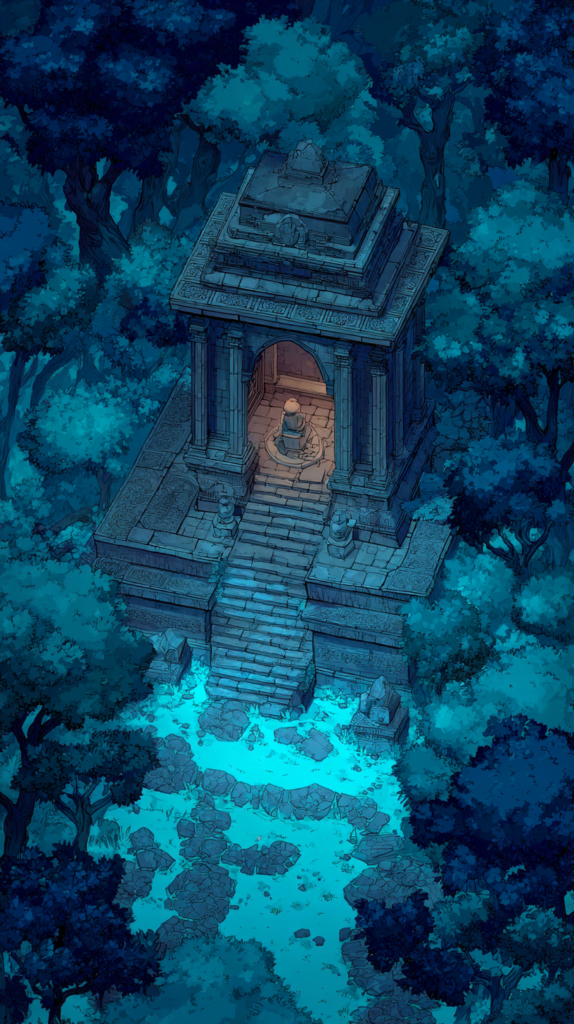
In one campaign, a player’s rogue kept leaving shiny coins at lonely crossroads as casual offerings to a minor deity of travel and safe passage. The character did it half-jokingly at first, muttering a quick thanks before risky journeys. Over several sessions the gestures continued, even when the party faced lean times. The god began to respond in small ways: a timely merchant caravan appearing when supplies ran low, a bandit ambush revealed by an unexpected crossroads marker, and once a lost map that guided them through dangerous territory.
What started as scattered coins gradually transformed the area. Word spread among travelers and traders about the “lucky crossroads” where offerings seemed to bring fortune. More people left tokens there. Within a year the site had grown into the largest temple in the region, complete with a budding trade city forming around it. Merchants built stalls, inns sprang up, and the once-minor god gained real influence. Other characters in the party started debating whether to seek the deity’s favor for their own goals, and the whole group found themselves entangled in local politics tied to the growing shrine. That kind of organic growth makes the pantheons feel alive rather than fixed on a handout.
Practical Tools for Busy Game Masters
When designing each god, run through these quick questions:
- What does this deity want most?
- What would make them withdraw favor?
- How do they typically communicate with mortals?
- What is one personal flaw that creates interesting problems?
- What is one hook that could draw any character type into their orbit?
A simple one-page template helps:
- Name and primary domains
- Core personality and flaw
- One key myth or legend
- One everyday ritual
- One way the god might help or hinder the party
Test your pantheons lightly before your first session. Mention the gods in passing during character creation or world introduction and watch which ones spark interest.
Common Mistakes to Avoid
Avoid making every god equally mysterious or powerful—contrast creates interest. A distant, unknowable creator paired with meddlesome minor spirits gives players different ways to engage. Also resist the urge to tie every deity to massive world-ending plots. Small, personal stakes often land harder and feel more immediate at the table.
Most importantly, don’t treat the pantheon as static. Let actions have consequences. When players ignore or anger a god, show it. When they earn favor, make it visible. That feedback loop is what turns passive lore into something the whole group actually cares about.
Pantheons that players care about does not need dozens of perfectly balanced entries or elaborate mechanics. It needs a handful of flawed, motivated beings whose wants intersect with the characters’ lives in messy, interesting ways. Start small, listen to your table, and let the gods grow through play. You might be surprised how quickly your players begin arguing over which offering to make or whose side to take when divine trouble arrives.