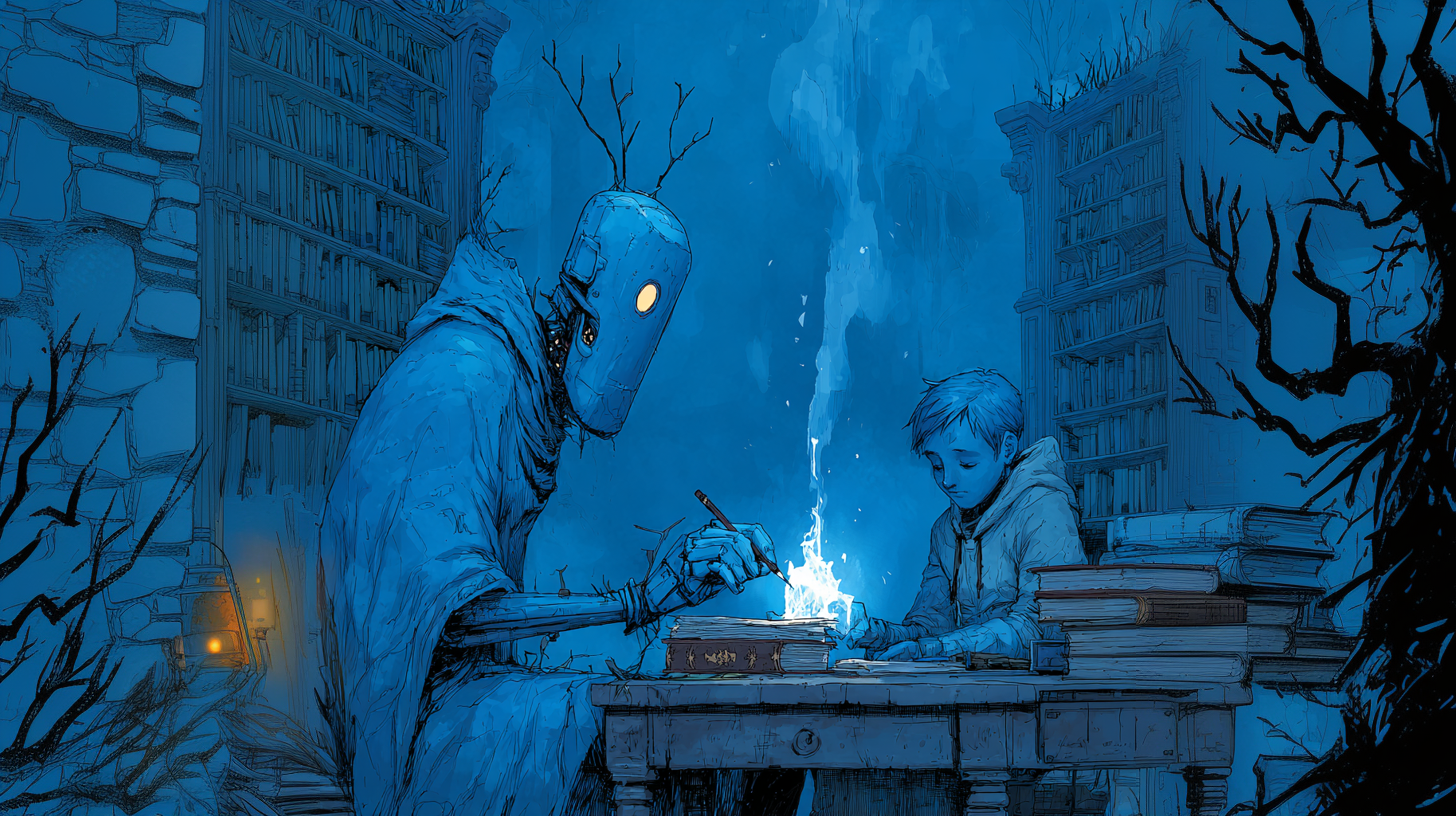
How AI Helps with Dark Fantasy Plot Hooks
That familiar dread hits the night before a session. You know the players will show up ready to chase threads, make messy choices, and ask questions you never planned for. You want something tense that fits your dark fantasy campaign, not just another tavern rumor pinned to a corpse.
AI can help here. Not as a replacement for your storytelling, but as a quick way to move past the blank page.
In dark fantasy especially, pressure matters. Old guilt, bad bargains, hunger that never quite leaves, rot under the floorboards, duty that costs too much. When time is tight, pulling one strong dilemma together feels hard enough. Coming up with three solid options and picking the best one is tougher. AI hands over raw material fast so your real work becomes choosing and shaping instead of starting from nothing.
I have used it most after sessions where the party made a morally gray call. The kind that deserves consequences but I have not yet figured out what shape those should take. Feed the choice into a prompt and suddenly you have options instead of a blank notebook.
Why AI Works for Dark Fantasy Hooks
Dark fantasy hooks land when they put people in spots they would rather avoid. The village survives only if someone pays a terrible price. The missing child returns changed. The saint existed, but the truth behind the miracles is ugly. The debt can be cleared, though not without stain.
AI handles this kind of idea generation reasonably well because it remixes familiar elements quickly. Ask for ten takes on a plague-struck village, a knight with a compromised oath, or a relic better left buried, and at least one angle usually feels worth keeping. It may not arrive finished, but it gives enough spark to build from.
The real value is speed. When prep time is thin you do not need perfection. You need a situation with real tension, forward momentum, and space for player decisions. AI tends to deliver half-formed problems. You turn them into something that belongs to your campaign.
The Tool Matters Less Than the Prompt
You do not need a special platform. ChatGPT, Claude, or whatever large language model you already use will do. The difference between a useful result and something forgettable usually comes down to how you ask.
Still, some tools help if you want to stay consistent with existing notes or generate related pieces like NPCs, rumors, or side quests. If it keeps you in your world, use it. If it spits out ten pages of polished but empty material, set it aside.
The common mistake is expecting the model to understand your campaign from a vague request like “dark fantasy hook please.” It cannot. You have to describe the kind of darkness you mean.
Is your setting bleak and intimate, where every winter counts and debts of grain are remembered for years? Or is it mythic and crumbling, full of dead empires and old sins that leak into the present? Both count as dark fantasy, but they call for different kinds of hooks.
Prompts That Give You Something Usable
Specific prompts work better. Include what happened last session, the tone you want, pressures already moving, and the kind of payoff the table needs.
A prompt that usually produces better results looks more like this:
Give me four plot hooks for a wet, famine-struck border duchy. Last session the party spared a captured cult messenger because the paladin thought he was telling the truth. Each hook should bring moral compromise, fit one to three sessions, and connect to a local noble house, a village short on food, or a shrine the party already visited.
That gives the model something concrete to push against. It knows the recent choice, the scale, and the connections that will make the output feel less generic.
Asking for contrast between options can help too. One tragic, one paranoid, one built around temptation instead of violence. That often separates three versions of the same idea from three genuinely different paths.
The First Draft Is Never the Final Hook
Even when the output feels promising, it usually arrives a little too neat or symmetrical for most tables. That is normal. Treat the first response as raw ore, not the finished blade.
Take the strongest piece and tie it to something the players already care about. If the hook mentions a cursed mill, make the miller the cleric’s distant cousin. If a body washes up with a familiar signet ring, link it to the rogue’s half-forgotten burglary from months ago. If a spirit demands justice, connect it quietly to the compromise the group still avoids discussing.
That single change often matters more than any elegant wording. Players engage because the situation touches something already alive in your shared history, not because the premise sounds clever in the abstract.
What AI Tends to Get Wrong
It drifts toward standard fantasy pieces. Hidden heirs, ancient prophecies, cults under every floorboard, mysterious artifacts with convenient powers. You can use those elements, but dark fantasy needs texture or it starts to feel like thin tragedy.
If you want grounded pressure, say so in the prompt. Mention hunger, debt, damp rot, illness, shame, blackmail, failed harvests, unpaid tithes. Push toward material weights rather than pure spooky atmosphere.
AI also likes to overbuild. You ask for a hook and sometimes receive six factions, a lost cathedral, a bloodline curse, and a five-act structure. That is not a hook. It is extra homework.
Keep requests small. Ask for a dilemma, a disappearance, a demand, or a clear sign that something cannot be ignored. Then cut anything that feels too complicated once it comes back.
And remember, the model has no sense of your table’s boundaries. It does not know which subjects feel too raw or cruel for your group. That judgment stays with you.
A Practical Workflow for Prep
Here is the approach I return to most often:
- Feed in the last meaningful player choice.
- Ask for three to five possible consequences or hook directions.
- Pick the one that carries the most pressure.
- Rewrite one detail so it connects directly to an existing NPC, location, or earlier decision.
- Trim whatever feels overbuilt.
- Keep the core dilemma and drop the filler.
That is usually enough to get a playable session.
One example started as a plain idea about a missing grain shipment and whispers of a bargain made in the woods. Serviceable but easy to forget. After some shaping, the grain was headed for a town the party had already let down once, and the person behind the bargain turned out to be kin to one of the characters. The stakes felt heavier right away.
Now the choices sit there: burn the tainted grain and risk starvation in the town? Distribute it and live with what comes after? Head into the woods to renegotiate with something that has already taken its payment?
That became a session worth remembering.
Making the Most of AI Without Losing Your Voice
AI is useful because it helps you start. Expecting finished dark fantasy from it will usually disappoint. Treating it as a source of sparks, angles, and complications you can dirty up and make local works much better.
The real trick is taking those generated ideas and making them messier, more personal, and more tangled in the choices your players have already made. When that happens, the hook stops feeling like something the machine handed over and starts sounding like it belongs to your campaign.
If you have tried this approach at your table, I would be interested to hear what worked and what needed extra shaping. The balance between speed and ownership matters, and every group finds it a little differently.
For more on treating AI as a brainstorming partner rather than a replacement, see this discussion on keeping imperfection in your prep: Before you use AI for your next adventure.